In this article
- Your Hormones May Be Behind Those Unexpected Breakouts
- Why Do the Pimples Often Appear Around Your Chin and Jawline?
- Why Does It Keep Happening Every Month?
- What Can You Do to Manage Period-Related Breakouts?
- What If the Breakouts Leave Dark Marks?
- When Should You Pay More Attention to Your Breakouts?
- Your Skin and Your Cycle: What Should You Remember?
Have you ever noticed that just when your period is approaching, a few unexpected pimples decide to show up? Perhaps it's a painful bump on your chin, a cluster of spots around your jawline, or breakouts that seem to appear out of nowhere.
And just when you think your skin is finally settling down, another menstrual cycle begins, and the process repeats itself.
If this sounds familiar, you're not imagining things. Your menstrual cycle can influence your skin, and hormonal fluctuations are one of the reasons some women experience more breakouts in the days leading up to their period.
But why does this happen, and is there anything you can do about it?
Let's get into it.
Your Hormones May Be Behind Those Unexpected Breakouts
Throughout your menstrual cycle, your hormone levels naturally rise and fall. These changes don't just affect your mood, energy levels and body; they can also influence your skin.
In the days leading up to your period, changes in the balance between oestrogen and androgens (hormones that include testosterone) can contribute to increased activity in your skin's oil-producing glands.
These glands produce sebum, the natural oil that helps keep your skin moisturised.
However, when excess sebum combines with dead skin cells, it can clog your pores and create an environment where acne develops.
The result? Those familiar pre-period breakouts.
Why Do the Pimples Often Appear Around Your Chin and Jawline?
Have you noticed that your period-related breakouts seem to favour your chin, jawline or lower cheeks?
There's a reason this pattern is commonly associated with hormonal acne.
The lower part of the face is a common area for hormonal acne in adult women. These breakouts may appear as tender, inflamed bumps beneath the skin rather than the small surface-level spots you might be used to.
However, hormonal acne isn't restricted to this area. It can also appear on your cheeks, neck, chest and back.
It's also worth remembering that not every pimple around your chin is hormonal. Other factors, including skincare products, friction and existing acne, can contribute to breakouts too.
Why Does It Keep Happening Every Month?
One of the frustrating things about period-related acne is that it can feel like you're starting all over again every month.
This happens because your menstrual cycle is a recurring process, and the hormonal changes associated with it happen repeatedly.
For some women, breakouts begin a few days before menstruation and gradually settle afterwards. For others, they may last longer or continue throughout the month.
This doesn't necessarily mean your skincare routine isn't working. It may mean your skin is responding to recurring hormonal changes.
What Can You Do to Manage Period-Related Breakouts?
While you may not be able to prevent every hormonal breakout, you can take steps to manage them and avoid making things worse.
Here are a few things to keep in mind:
Don't Overwash or Over-Scrub Your Face: It can be tempting to reach for an exfoliating scrub or wash your face more frequently when you notice new pimples. However, excessive cleansing and harsh scrubbing can irritate your skin. Stick to a gentle cleanser and avoid trying to scrub the breakouts away.
Keep Your Skincare Routine Consistent: Your skin doesn't need an entirely new routine every time your period approaches. Continue using products that work for your skin, including a gentle cleanser, moisturiser and sunscreen. Consistency is more helpful than constantly switching products in response to every new breakout.
Consider Acne-Fighting Ingredients: Certain skincare ingredients can help manage acne when used appropriately.
- Salicylic acid: Helps exfoliate inside the pores and reduce blockages.
- Niacinamide: Supports the skin barrier and can help regulate excess oil and reduce inflammation.
- Azelaic acid: Helps with acne and the dark marks that can remain after breakouts. If you're looking for a routine specifically designed for acne-prone skin, you can explore the Toke Anti-Acne Facial Set. It features four products: an Anti-Acne Facial Wash, Hydrating & Soothing Face Toner, Face & Body Exfoliating Scrub, and Anti-Acne Face Cream.
Together, they offer a routine for cleansing, exfoliating, hydrating and caring for blemish-prone skin. Introduce active ingredients gradually, and avoid combining several strong treatments at once.Resist the Urge to Pick Your Pimples: We know how tempting it can be, especially when a pimple feels painful or looks particularly noticeable. But squeezing or picking at breakouts can increase inflammation and raise the risk of scarring and post-inflammatory hyperpigmentation (dark marks left behind after acne). Give your skin time to heal.
What If the Breakouts Leave Dark Marks?
Sometimes, the pimples disappear, but the marks they leave behind seem to stay much longer.
This is known as post-inflammatory hyperpigmentation (PIH). It occurs when inflammation triggers excess melanin production in the affected area.
For deeper skin tones, these dark marks can be particularly noticeable and may take time to fade.
This is why managing acne isn't just about treating existing pimples. It's also important to avoid picking at your skin, support your skin barrier and use sunscreen consistently.
If dark marks are already present, ingredients such as niacinamide, azelaic acid and tranexamic acid may help improve their appearance over time.
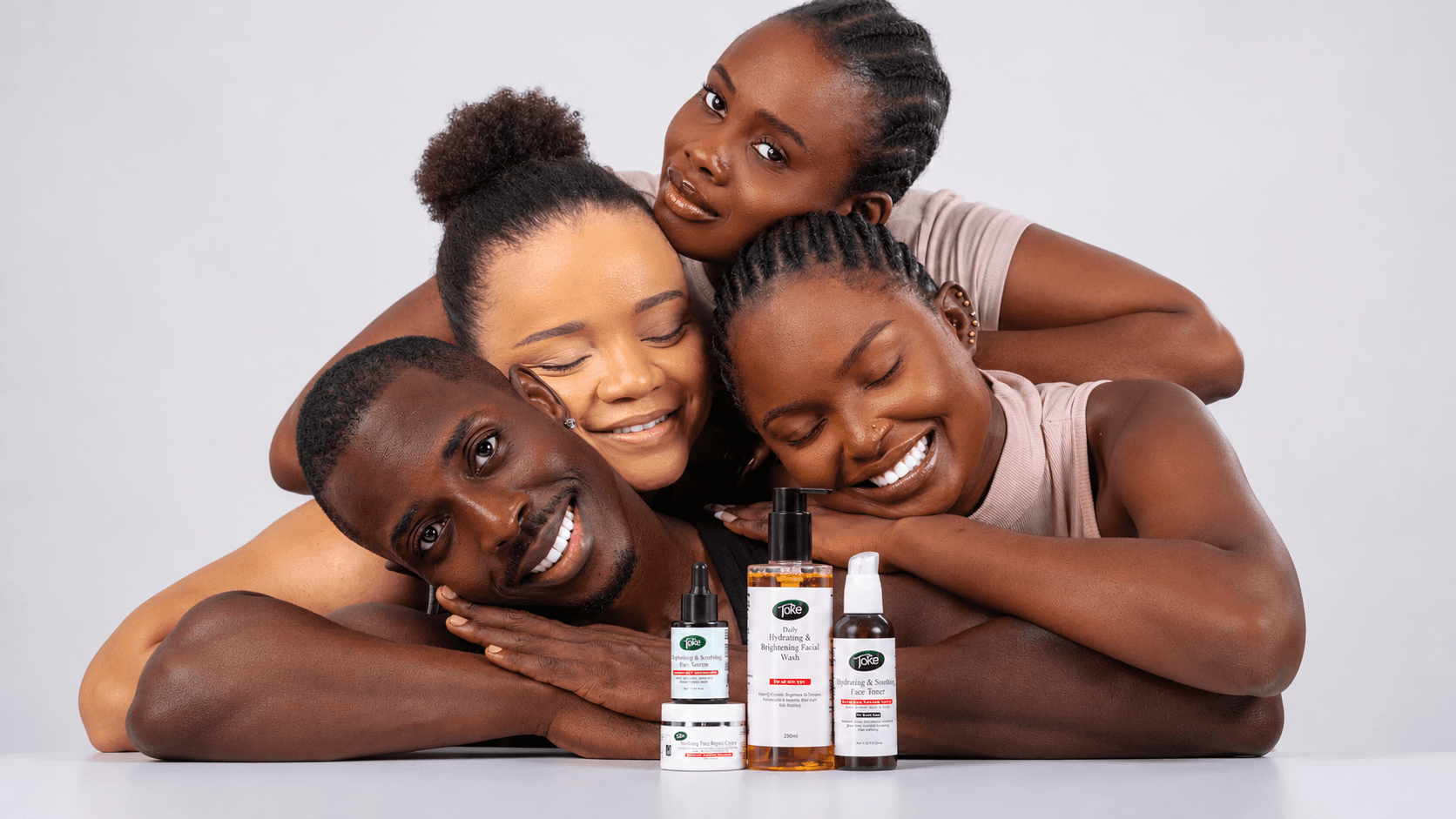
For a routine that also addresses uneven skin tone and dark spots, consider exploring the Toke Hyperpigmentation Set. It includes a Daily Hydrating & Brightening Facial Wash, Hydrating & Soothing Face Toner, Brightening & Soothing Face Serum, and Soothing Face Repair Cream to help care for skin with hyperpigmentation concerns.
Remember, dark marks take time to fade. Consistent skincare and daily sunscreen use are important parts of the process.
When Should You Pay More Attention to Your Breakouts?
Occasional breakouts around your period are common. However, you shouldn't automatically assume that every persistent or severe breakout is simply hormonal.
Consider speaking with a dermatologist or healthcare professional if your acne is:
Deep, painful or leaving scars.
Persistent even after your period.
Becoming progressively worse.
Accompanied by irregular periods, increased facial hair or unusual hair thinning.
These symptoms may require further assessment, particularly to check for underlying hormonal conditions such as polycystic ovary syndrome (PCOS).
Your Skin and Your Cycle: What Should You Remember?
Your skin doesn't exist separately from the rest of your body. Changes happening internally can sometimes show up externally, and your menstrual cycle is one example.
So, the next time you notice a few extra pimples before your period, remember that it may be your hormones influencing your skin rather than a sign that you've suddenly forgotten how to take care of it.
Pay attention to your skin, keep your routine gentle and consistent, and avoid the temptation to over-treat every breakout.
And if you're still unsure which products are suitable for your skin concerns, explore Toke Cosmetics Skin Quiz to help you find a routine that better suits your needs.
Because healthy-looking skin starts with understanding what it needs.
Related reading: Why Do Dark Marks Remain After Acne? The Truth About Post-Acne Marks